
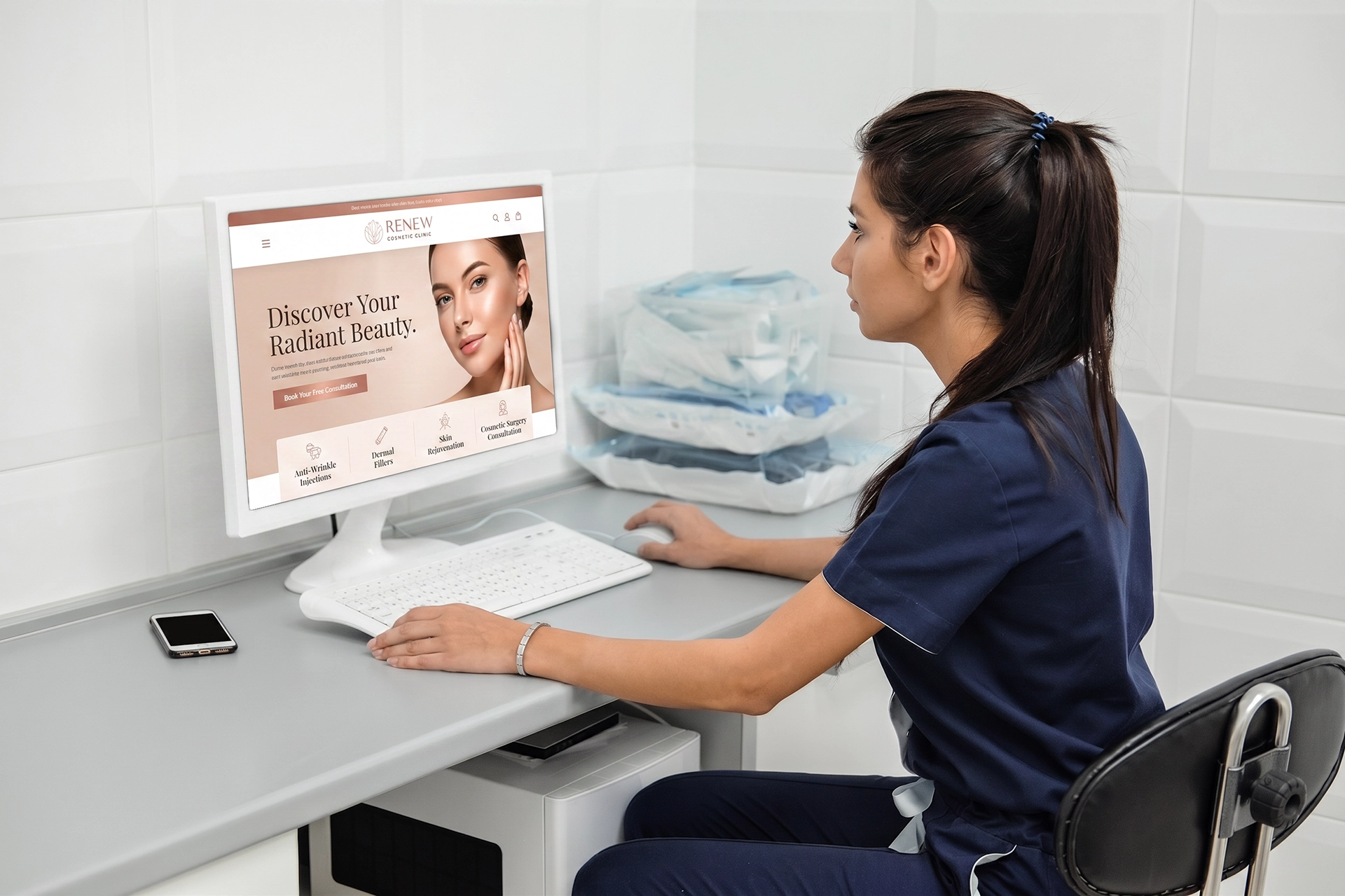

Your website is the one marketing asset regulators, Google, AI assistants and prospective patients all read. For Australian cosmetic clinics, it also carries more legal risk than any other channel: the AHPRA advertising guidelines that took effect on 2 September 2025 and the TGA’s prohibition on advertising prescription-only medicines both apply to every page you publish.
Most clinic websites we review fail on both fronts at once: non-compliant treatment pages and missing the basics that convert visitors into consultations. Here’s what a cosmetic clinic website actually needs in 2026, structured as a working checklist.
This article is general information, not legal advice.
1. Compliance foundations (fix these first)
These are the items that carry regulatory risk. Under the Therapeutic Goods Act, TGA infringement notices for advertising prescription-only medicines have reached $13,320 per contravention for individuals and $66,600 for corporations, and every non-compliant page can count separately.
- No prescription product references anywhere. No brand names, no ingredient names, and no generic workarounds like “anti-wrinkle injections” or “dermal filler”. The TGA closed that loophole in its updated guidance. This includes page titles, URLs, image file names, alt text and meta descriptions. Search engines read them, and so do regulators.
- No price lists for prescription-only treatments. Publishing per-unit or per-treatment pricing for prescription-only products is treated as advertising the product.
- Treatment pages built around concerns and consultations. Structure pages as “Concern → what a consultation involves → who you’ll see → book” rather than “Product → price → book”. “Book a consultation to discuss treatment options for facial ageing” is compliant; a product menu is not.
- Real, unedited imagery with disclaimers. Under the 2025 AHPRA guidelines, advertising must use genuine images without misleading editing, and any results imagery needs a clear “individual results may vary” warning.
- No clinical testimonials on your site. Testimonials about clinical aspects of a regulated health service breach section 133 of the National Law, and influencer testimonials are explicitly banned. Reviews patients post independently on Google are their own, but don’t republish clinical ones on your site.
- Practitioner registration details displayed. Each practitioner’s registration type and profession stated plainly (“Registered Nurse”, “Medical Practitioner”), ideally with AHPRA registration numbers on bio pages.
- No content targeting under-18s. Review imagery, language and any campaign landing pages.
- Realistic language. Strip “safe”, “painless”, “quick”, “gentle” and “perfect” from procedure copy. AHPRA flags these as creating unrealistic expectations.
- Privacy policy and consent. A current privacy policy covering health information (which is “sensitive information” under the Privacy Act), plus compliant handling of any photos submitted through forms.
2. Trust and conversion (what makes patients book)
Compliance limits what you can say. Trust signals are how you compete on everything else, and they’re what patients actually use to choose between clinics.
- Practitioner-led “About” pages. Qualifications, years of experience, training, professional memberships and a genuine photo. In a market where patients can’t compare products, they compare people.
- A transparent consultation process page. What happens at a first consultation, how long it takes, what it costs, and the fact that no procedure happens on the spot for under-18s (mandatory seven-day cooling-off period). Transparency converts.
- Your clinic, honestly photographed. Real photos of your rooms and team outperform stock imagery for both trust and AI visibility.
- Clear fees for what you can price. Consultation fees, skin treatments and non-prescription services. Patients expect some pricing signal; give it where it’s compliant.
- Prominent, low-friction booking. Online booking (or at minimum a short enquiry form) reachable from every page in one click. Every extra field costs you bookings.
- Complaint and safety information. Linking to AHPRA’s resources and being upfront about risks isn’t just required practice; it’s a differentiator that signals a serious clinic.
3. Technical foundations

- Fast on mobile. The majority of clinic traffic is mobile, and Core Web Vitals affect ranking. Target a sub-2.5-second Largest Contentful Paint; compress imagery (WebP), lazy-load below the fold.
- HTTPS, plus secure forms. Health-related enquiries are sensitive data.
- Local SEO plumbing. Consistent name/address/phone sitewide, matching your Google Business Profile; suburb and city named naturally in titles and copy; an embedded map on the contact page.
- Schema markup. LocalBusiness/MedicalBusiness JSON-LD with address, geo, opening hours and practitioner details. Do not put prescription product names or therapeutic claims in schema; it’s still advertising. Add FAQPage schema to your FAQ content.
- Accessible. Alt text, contrast, keyboard navigation. WCAG 2.1 AA is the benchmark and increasingly a legal expectation.
- Clean information architecture. Concern-based navigation (e.g. “Skin”, “Face”, “Body”) maps to how patients search and keeps you clear of product-menu structures.
4. Content that ranks, in Google and in AI answers
Patients increasingly ask ChatGPT, Claude and Google’s AI results which clinic to visit and what the rules are. AI assistants cite pages that answer questions directly, so structure your content for extraction:
- Question-based headings. “What happens at a cosmetic consultation?” as an H2, answered in the first two sentences beneath it.
- An FAQ section on every key page, marked up with FAQPage schema.
- Specifics over slogans. Dates, regulation names, process steps and numbers get cited; “we craft beautiful results” does not.
- A genuinely useful education hub. Guides on regulations, consultation preparation, recovery and aftercare build the topical authority that both Google and AI engines reward, and they’re the most compliant marketing you can do.
- One clear “who we are” statement. Somewhere crawlable, in plain text: who you are, where you are, what you do, and who your practitioners are. AI engines can only recommend what they can read, and most don’t execute JavaScript, so critical claims shouldn’t live in animated counters or scripts.
The 20-point checklist
Compliance
1. No prescription product names, ingredients or generic injectable terms anywhere (including URLs, alt text, metadata)
2. No prices for prescription-only treatments
3. Treatment pages framed around concerns and consultations
4. Real, unedited images with “results may vary” disclaimers
5. No clinical testimonials or influencer endorsements
6. Practitioner registration details displayed
7. No content aimed at under-18s
8. No “safe / painless / quick / perfect” language
9. Current privacy policy covering health information
Trust & conversion
10. Practitioner bios with qualifications and real photos
11. Consultation process page with consultation fee
12. Real clinic photography
13. One-click booking from every page
14. Risk and complaints information
Technical
15. Mobile LCP under 2.5s
16. Consistent NAP + Google Business Profile alignment
17. LocalBusiness/MedicalBusiness + FAQPage schema (no product claims)
18. WCAG 2.1 AA accessibility
Content
19. Question-based headings with direct answers, FAQ on key pages
20. Education hub with specific, dated, regulation-aware content in plain crawlable text
Frequently asked questions
Can my website list the treatments we offer?
Do I need to take down my before-and-after gallery?
Is my web agency responsible for compliance too?
How often should I audit my site?
Novu Creative is a Sydney design and digital agency specialising in AHPRA- and TGA-aware branding, websites and marketing for aesthetic and cosmetic clinics. If you’d like your site measured against this checklist, book a call.