
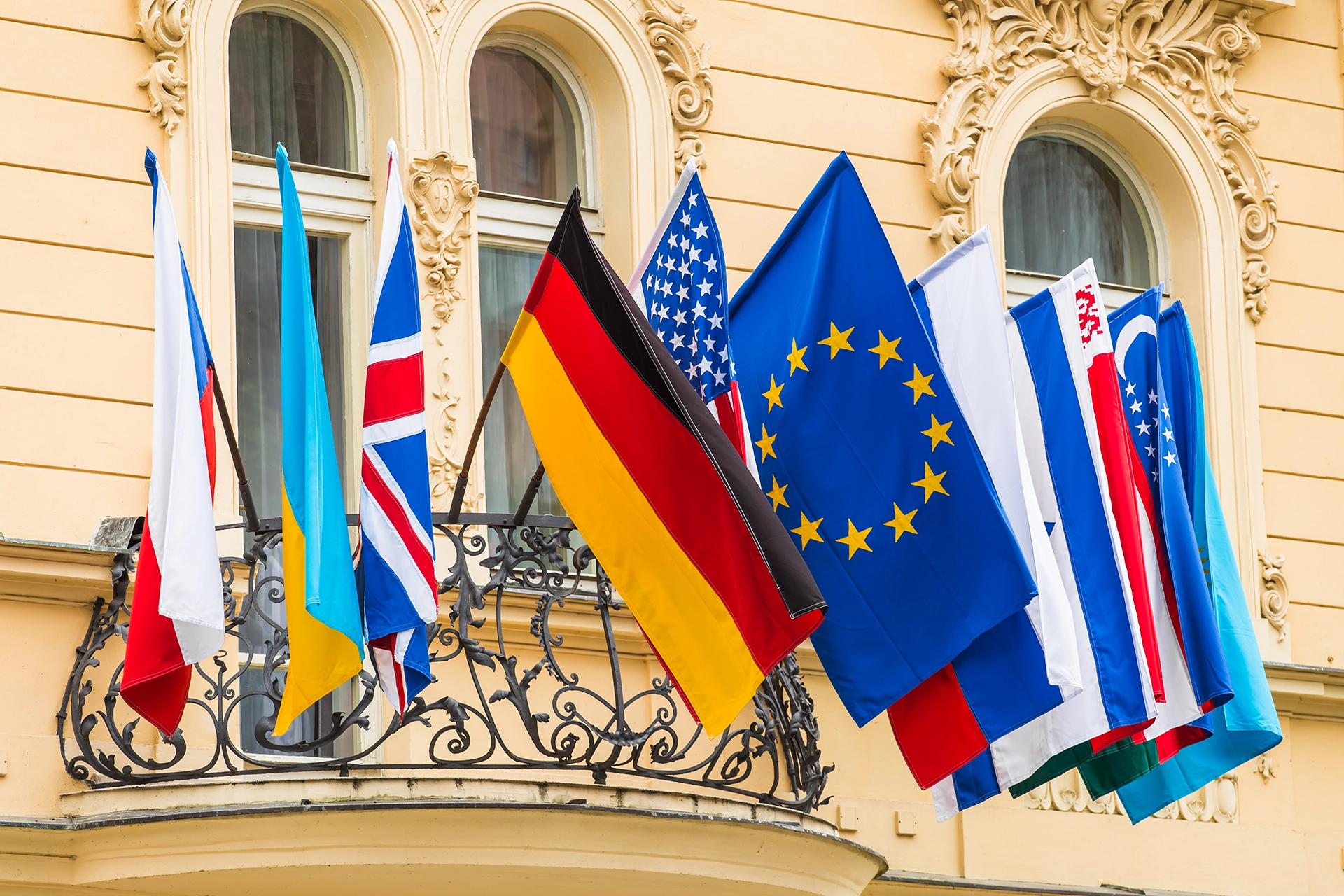
On 2 August 2026, the European Union’s transparency rules for AI-generated content became applicable. Australia has no equivalent law and none is currently planned. So why should an Australian business care?
Because disclosure is arriving here through the back door: through EU-facing customers, through global platforms that adopt the strictest standard worldwide rather than building a separate policy per market, and through advertising products that have already shipped AI labelling to everyone, including you. Google rolled out AI content labels across its advertising platforms in July 2026, three weeks before the EU deadline, and those controls are live in Australian accounts too.
The businesses that treat this as a compliance burden will scramble later. The ones that treat it as a positioning asset will get something more valuable: a reason for customers to trust them at exactly the moment trust in content is collapsing.
This article is general information, not legal advice.
What do the EU rules actually require?
Article 50 of the EU AI Act sets transparency obligations in four areas, and the European Commission adopted detailed guidelines on 20 July 2026 explaining how they work. The four duties:
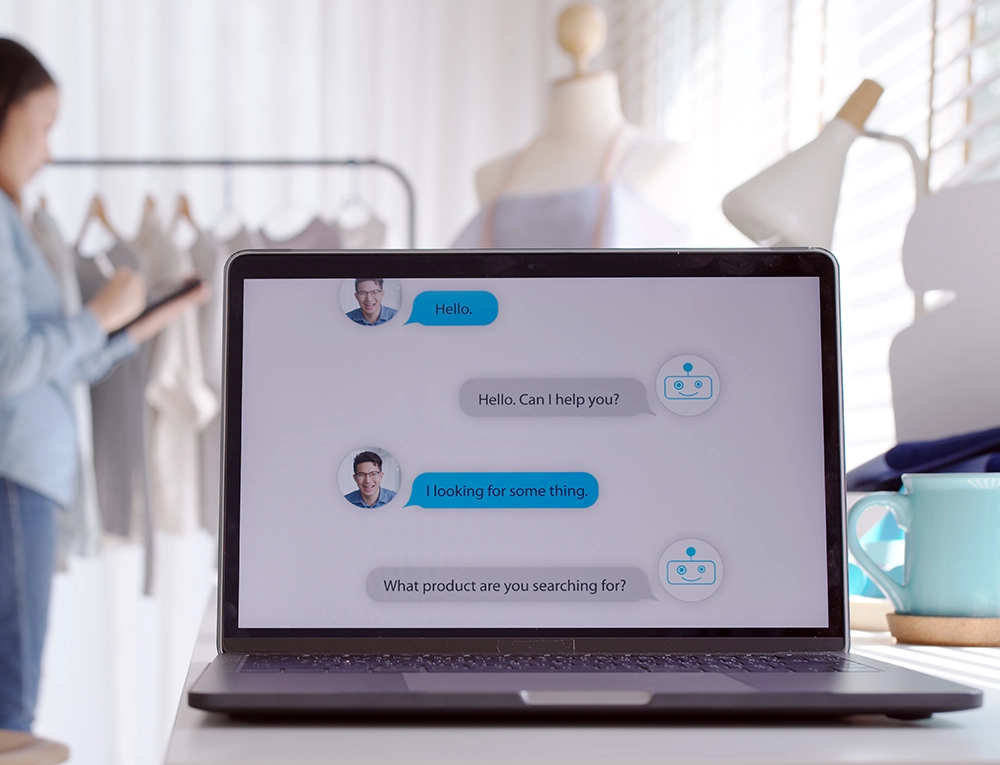
- Chatbots and AI interactions. If people are dealing directly with an AI system, they must be told, clearly and upfront at the moment of contact rather than in fine print. This includes agentic AI acting on someone’s behalf.
- Machine-readable marking of synthetic content. Providers of generative AI systems must embed marks that allow AI-generated or manipulated output to be detected. This obligation sits with the AI provider, not with you as a user of the tool.
- Emotion recognition and biometric categorisation. Deployers must tell people when these systems are being used on them.
- Deepfakes and public-interest text. Deployers must disclose deepfakes, and must label AI-generated text published to inform the public on matters of public interest where there has been no meaningful human review.
Penalties reach €15 million or 3 per cent of worldwide annual turnover, whichever is higher.
What the rules do not cover
This is where most commentary goes wrong, and where panic sells consulting hours. Read the scope carefully:
- Your everyday social graphics are largely not captured. A deepfake is defined as AI-generated or manipulated image, audio or video that resembles existing persons, objects, places or events and would falsely appear authentic. The Commission’s guidance is explicit that clearly fantastical or physically impossible content, dragons or people flying unaided, falls outside the definition. An AI-assisted background, an illustrated hero image, a generated texture: not a deepfake.
- Assistive editing is carved out. The marking obligation doesn’t bite where an AI system performs a standard editing function or doesn’t substantially alter the input or its meaning. Colour grading, upscaling and object removal sit in different territory to generating a photorealistic scene of a person who doesn’t exist.
- The text-labelling duty is narrow. It applies to text published to inform the public on matters of public interest, essentially news and current affairs, not your product page or a blog post about skincare.
- Nothing needs retroactive labelling. Content generated and published before 2 August 2026 is not caught, though the Commission encourages labelling anyway. There’s also transitional relief until December 2026 for the marking obligation on generative AI systems already on the market.
So: if you're a Sydney clinic posting AI-assisted graphics, almost none of this applies to you directly. If you're producing synthetic video of a real-looking spokesperson, or running an AI chat assistant on your site for European customers, it does.
Why this reaches Australian businesses anyway
Australia deliberately went the other way. The National AI Plan, released in December 2025, shelved the proposed economy-wide mandatory guardrails and confirmed the government would regulate AI through existing technology-neutral laws and sector regulators, supported by the non-binding Guidance for AI Adoption and an advisory Australian AI Safety Institute. As of mid-2026 there is no Australian AI Act and no AI-specific disclosure requirement.
That does not leave Australian marketers unaffected, for three reasons.
- Territorial reach. The EU rules apply to providers and deployers serving EU users regardless of where the business is established. An Australian brand selling into Europe, running EU-targeted campaigns or operating a chatbot accessible to European customers is in scope.
- Platforms globalise the strictest standard. Building one policy is cheaper than building thirty. Google’s new AI label controls reference disclosure requirements in the European Union, India and New York, and shipped across Google Ads, Display & Video 360, Campaign Manager 360, Merchant Center and Ads Editor. Ads using labelled assets carry an AI disclosure icon wherever they appear, and users can view a “How this ad was made” panel. Meta has run AI labelling on its platforms for some time. You are already operating inside a disclosure regime, whether or not Australian law requires one.
- Australian Consumer Law is already live. This is the point most Australian coverage misses. We may not have AI-specific rules, but section 18 of the Australian Consumer Law has always prohibited misleading and deceptive conduct. Synthetic imagery presented as a real result, a fabricated testimonial, an AI-generated “photo” of a product or premises that doesn’t look like that: these are misleading conduct questions today, with no new legislation required. In regulated industries the exposure compounds, since AHPRA’s advertising guidelines already require genuine, unedited images for higher-risk cosmetic procedures.
The trust argument: disclosure as positioning, not penance

Here’s the reframe worth internalising. As AI-generated content floods every channel, audiences are becoming reflexively suspicious of everything they see. The scarce commodity is no longer content. It’s credibility.
In that market, a business that says plainly where it uses AI and where it doesn’t is making a competitive claim, not an admission. “Every photograph on this site is of our actual team, our actual premises and our actual work” is a powerful sentence precisely because most competitors can no longer say it. Disclosure lets you draw the line between the parts of your marketing where AI genuinely helps, and the parts where human craft is the product.
For regulated clients this is sharper again. A clinic that publishes an AI use statement alongside its AHPRA compliance commitments is signalling the same underlying thing patients actually care about: this business tells the truth about what it shows you.
The businesses that will look worst are not the ones using AI. It’s the ones who used it quietly, said nothing, and got found out.
Practical wording you can use today
Website footer or a short /ai-use page:
How we use AI. We use AI tools to help with research, drafting and production. Every piece of content we publish is reviewed and approved by a person. Photography of our team, our workspace and our client work is real and unedited beyond standard colour and cropping. We do not use AI-generated images of people or results.
A short internal AI policy template
One page, reviewed twice a year. Adapt the specifics; keep the structure.
1. Where we use AI
- Research, summarising and first-draft copy
- Ideation, concepting and moodboarding
- Image editing: upscaling, background removal, colour work, retouching
- Code assistance and development
- Data analysis and reporting
- Transcription and meeting notes
2. Where we do not use AI
- Photography of people, premises, products or results presented as real
- Testimonials, reviews or case study quotes, which are always the client’s own words
- Claims, statistics, regulatory references or legal content without human verification against a primary source
- Final creative direction and strategic recommendations
- Anything a client has asked us to produce without AI
3. Rules that apply either way
- Every AI-assisted output is reviewed by a named person before it leaves the business
- Facts, figures and citations are verified against primary sources, never trusted from an AI output
- Client confidential material is not entered into public AI tools
- AI-generated imagery of people or outcomes is disclosed on the asset
- We record which tools were used on which deliverables
4. Sign-off
- Content and copy: [role]
- Imagery and design assets: [role]
- Regulated-industry content, including health and financial: [role], plus client sign-off before publication
- Policy owner and review date: [name], reviewed [month] and [month] each year
5. Client disclosure
- We tell clients where AI was used in their deliverables
- Where a client’s own compliance obligations require disclosure, we build the labelling in at production, not after
Frequently asked questions
Does an Australian business have to label AI-generated content?
Do the EU rules apply to my Instagram graphics?
What happens if I use Google's AI label setting?
Should we disclose AI use even where it isn't required?
Is Australia planning its own AI disclosure law?
Source:
- Regulation (EU) 2024/1689 (AI Act) Article 50
- European Commission, Guidelines on transparency obligations for providers and deployers of certain AI systems (adopted 20 July 2026)
- European Commission, Code of Practice on Transparency of AI-generated Content
- Google Ads Help, “Use AI content label settings and disclosures”
- Australian Government, National AI Plan (December 2025)
- National AI Centre, Guidance for AI Adoption (October 2025); Competition and Consumer Act 2010 (Cth) Schedule 2, s 18.